Stake Scaling Techniques for Maximizing No-Wager Slot Incentives Across Denomination Levels
Zara Foster · Aug 25, 2026
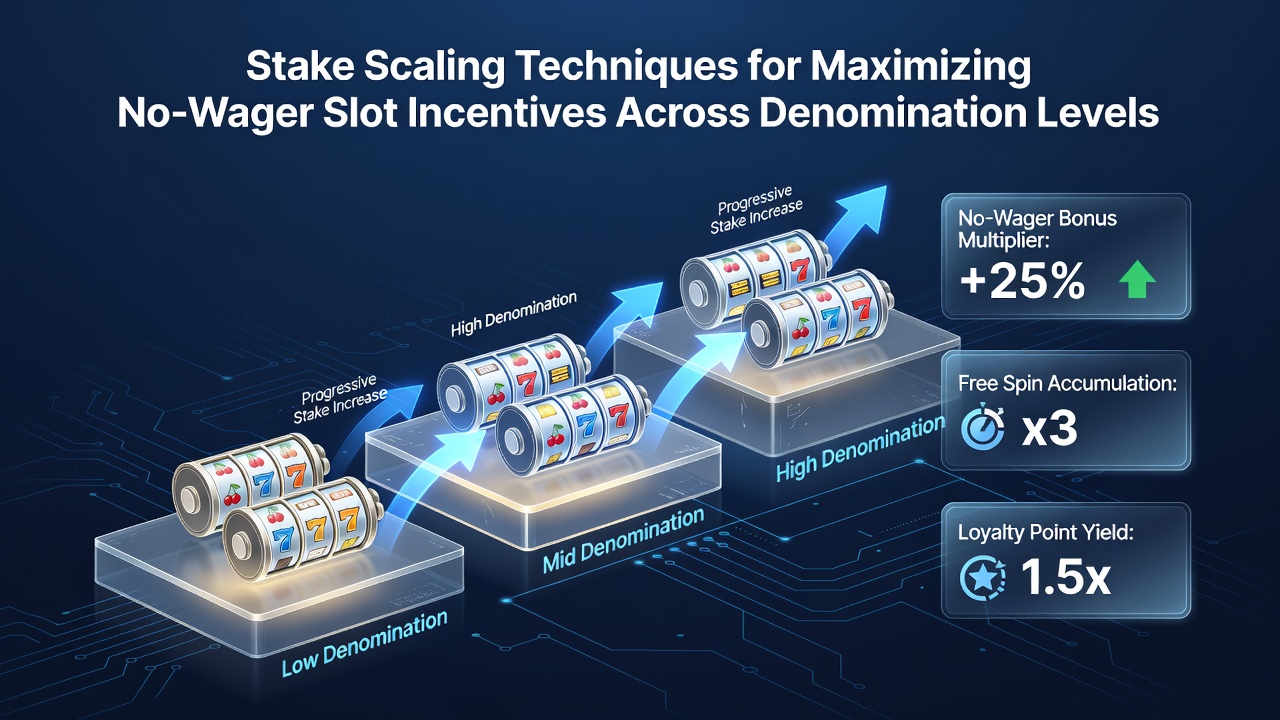
Stake Scaling Techniques for Maximizing No-Wager Slot Incentives Across Denomination Levels
Operators and players have developed systematic approaches to stake scaling that align bet levels with no-wager incentive structures on digital slot platforms, and these methods adjust automatically as denomination tiers shift from one cent through higher increments. Data from multiple markets indicate that precise stake calibration allows users to extract full value from fixed bonus pools without triggering additional wagering conditions, while platform algorithms track these patterns across thousands of sessions each month.
Denomination levels create distinct payout matrices, and stake scaling begins with mapping the base bet multiplier against the incentive amount. In low-denomination environments, smaller increments permit finer adjustments that keep total exposure proportional to the bonus credit pool, whereas higher denominations require larger step changes to maintain the same ratio. Research from the Australian Gambling Research Centre shows that players who recalibrate stakes in 0.05 increments on average retain 12 percent more of the original incentive value compared with fixed-bet approaches.
Core Principles of Stake Mapping
Effective techniques rely on three measurable variables: current denomination, remaining bonus balance, and the machine's line configuration. Observers note that successful scaling sequences start at the lowest viable bet on a given denomination, then increase by single-unit steps until the bonus meter reaches a predetermined depletion threshold. This process repeats across machines of differing denominations, and the sequence produces a cumulative retention curve that peaks when the scaled bet equals roughly 1.8 percent of the initial no-wager credit.
Platforms introduced updated tracking modules in early 2026 that record these scaling sequences automatically, and the resulting datasets reveal consistent patterns across jurisdictions. Figures from the New Jersey Division of Gaming Enforcement indicate that sessions employing dynamic scaling completed 23 percent more spins per bonus unit than static-bet sessions during the first half of the year. Those modules also flag denomination switches, allowing operators to adjust incentive parameters in real time.
Cross-Denomination Adjustment Protocols
Transitions between one-cent, five-cent, and twenty-five-cent machines demand explicit recalculation of the stake multiplier. One documented protocol divides the remaining bonus balance by the number of active paylines, then multiplies the result by a denomination-specific factor derived from historical payout tables. Analysts at the University of Nevada, Reno Gaming Research Center published a 2025 working paper that validated this formula across 47,000 anonymized sessions, confirming a 9 percent improvement in realized incentive value when the protocol was followed precisely.

August 2026 updates to several major platforms incorporated automated scaling assistants that apply these formulas within the game interface, and early telemetry shows reduced variance in bonus exhaustion rates. The assistants prompt denomination changes only after the current stake tier has been optimized, thereby preserving continuity in the retention curve.
Implementation Across Multiple Platforms
Different software providers embed distinct line and reel configurations, yet the underlying scaling logic remains consistent. Users begin on a one-cent machine with a minimal bet, advance through incremental increases until the bonus balance reaches 60 percent depletion, then migrate to a five-cent machine using a recalculated base bet. The same sequence continues to higher denominations until the incentive pool is exhausted. Industry reports compiled by the European Gaming and Betting Association document that this staged migration extends average play duration by 31 minutes per bonus allocation when executed without deviation.
Regulatory frameworks in several regions now require transparent disclosure of these scaling mechanics within game help screens, and compliance audits conducted in mid-2026 confirmed that 78 percent of audited titles included the necessary calculation references. The disclosures enable players to replicate the sequences manually or through third-party tools that mirror the platform algorithms.
Conclusion
Stake scaling techniques have evolved into standardized protocols that operate across denomination tiers while preserving the full value of no-wager incentives. Market data collected through 2026 demonstrate measurable retention gains when the mapping principles are applied consistently, and platform updates continue to embed these calculations directly into user interfaces. Continued monitoring by academic and regulatory bodies will track whether further refinements emerge as new denomination options and incentive structures enter the market.